Claims of 20–25% annual returns from organic farmland are everywhere. But what does the data actually say? We break down all three income streams — land appreciation, farm produce, and rental yield — with realistic projections.
If you've been researching managed farmland in India, you've seen bold ROI claims: "15–25% annual returns," "guaranteed passive income," "outperforms all asset classes." Some of these claims are legitimate. Others are inflated marketing. Here's a transparent, honest breakdown of how organic farmland actually generates returns — and what you can realistically expect.
The three income streams of managed farmland
Organic farmland investment in India generates returns through three distinct channels. Understanding each one separately is essential before evaluating any project.
Income Stream 1: Land Appreciation
This is the largest and most reliable component. Agricultural land within 60–120 km of major Indian cities has appreciated significantly over the past decade, driven by: - Urban sprawl pushing infrastructure outward (ring roads, expressways, IT corridors) - Rising demand for organic food and farm-to-table experiences - Increasing scarcity of developable land near cities - Growing HNI interest in farm retreats as lifestyle assets
In specific corridors near Bangalore — Hosur Road, Kanakapura Road, Tumkur Road — agricultural land prices have appreciated 4–6x over the past decade. That translates to roughly 15–19% compounded annual appreciation.
However, this varies significantly by location. Land 20 km from a growing infrastructure node will appreciate faster than land in a remote, unconnected area. Always check: proximity to city, existing and planned infrastructure, and whether the local economy is growing.
Realistic appreciation expectation: 10–18% per annum in well-chosen zones near Bangalore or Mumbai.
Income Stream 2: Farm Produce Revenue
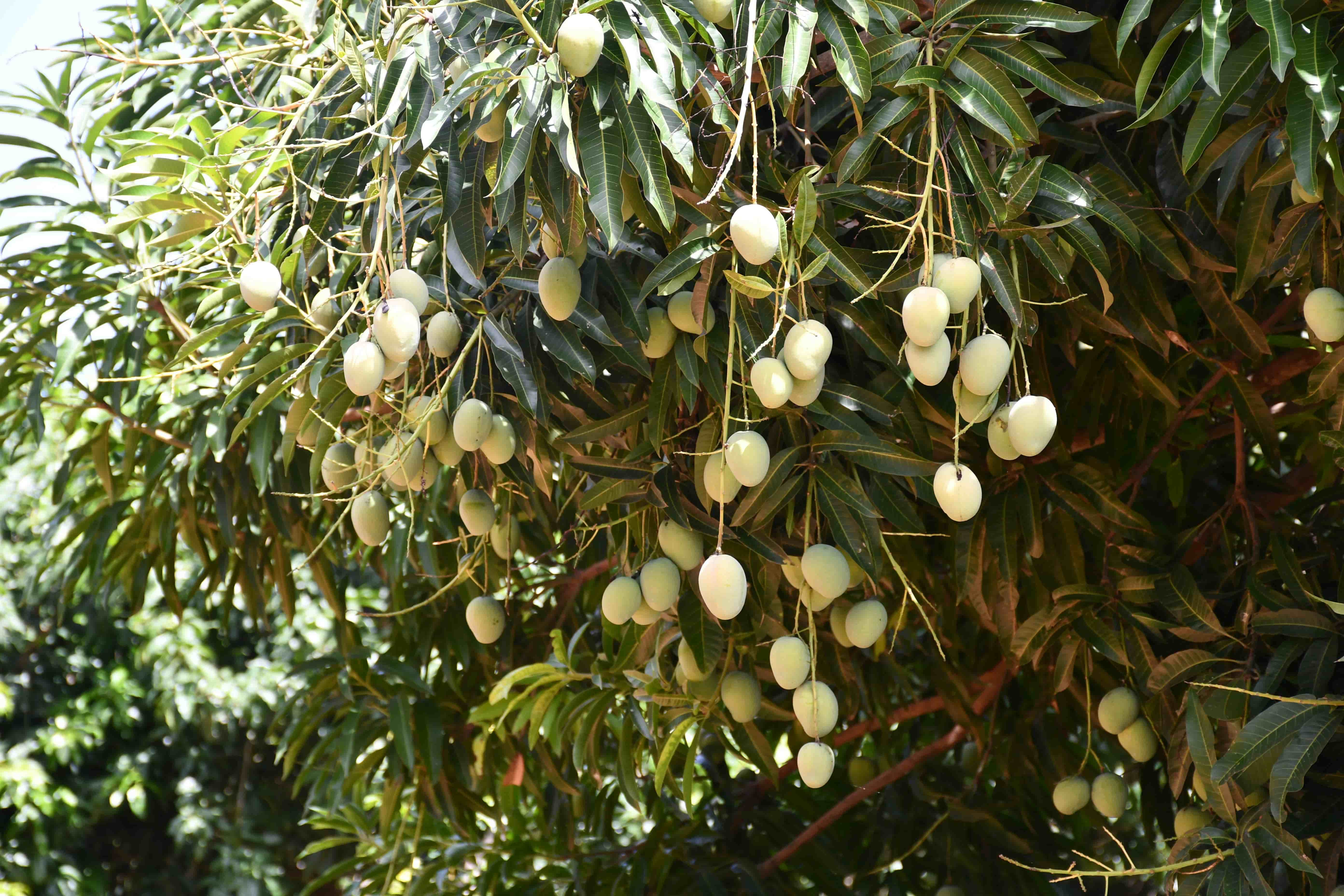
A managed organic farm generates income from what it grows: timber trees (teak, silver oak, mahogany), fruit orchards (mango, jackfruit, banana, coconut), and cash crops or vegetables. A typical managed farmland project shares a portion of this harvest revenue with investors.
What should you realistically expect here? On a 1-acre managed plot with timber and horticulture, annual farm income to the investor typically ranges from ₹40,000 to ₹1.2 lakh per year after management costs — depending on crop mix, maturity of the plants, and market prices.
The key variable is timing. Timber trees like teak produce most of their value at year 10–15 when they're ready for harvest. Fruit trees start producing meaningfully at year 3–5. In the early years of a project, farm produce income is modest. By year 7–10, it can become a meaningful income stream.
Realistic farm produce income: ₹40,000–1,20,000/year per acre from year 3–5 onwards.
Income Stream 3: Rental and Hospitality Income
Several managed farmland communities have resort-style infrastructure — clubhouses, cottages, swimming pools, open-air theatres — that are rented out for weekend stays, events, and corporate retreats. Some management companies share a portion of this rental income with investors.
This stream is the most variable and management-dependent. It requires consistent marketing, hospitality operations, and demand. When done well, it can contribute ₹20,000–60,000 per year per investor. When done poorly, it's negligible.
Don't make this a primary factor in your investment decision — treat it as a bonus income stream if it exists.
So what's the total ROI?
Here's a realistic composite projection for a ₹50 lakh investment in a managed organic farmland project near Bangalore, held for 10 years:
- Land value (15% CAGR): ₹50L → ~₹2.02 Cr
- Cumulative farm income (avg ₹70,000/year from year 3): ~₹5.6 lakh total
- Rental income (avg ₹30,000/year from year 2): ~₹2.4 lakh total
- Total at exit: approximately ₹2.1–2.3 Cr
- Tax paid: Zero (agricultural income and rural land gains are exempt)
- Effective CAGR: approximately 15–16% post-tax
Compare this to a ₹50 lakh apartment that returns ₹1.1–1.3 Cr over 10 years after taxes and costs. The farmland advantage is not marginal — it's structural.
What separates good returns from bad ones
Not all managed farmland investments perform equally. The key differentiators are:
- Location quality: Proximity to city, infrastructure growth, connectivity
- Legal clarity: Registered title, clean EC, no encumbrances
- Management quality: Does the team have a track record? Are accounts transparent?
- Crop mix: Diversified planting reduces weather and market risk
- Community: A strong investor community drives events, hospitality income, and resale demand
Red flags to avoid
Be cautious of any project that: - Promises fixed guaranteed returns (farmland is not a fixed-income instrument) - Cannot show registered sale deeds with title in your name - Has no track record or existing investors you can speak with - Is located in an area with no clear infrastructure growth story
The Rajan Farms approach to returns
At Rajan Farms, we are transparent about what drives returns on each project. Our investors receive annual farm management reports, access to verified documentation, and a resale support network. Land appreciation across our projects has tracked 14–19% per annum since inception. Farm produce income begins meaningfully from year 3.
If you're evaluating whether organic farmland belongs in your portfolio, the honest answer is: it does — as a long-horizon, tax-efficient, appreciating asset. Just go in with realistic expectations, verified documents, and a management team you trust.
Published by
Rajan Farms
Apr 2026 · 6 min read